
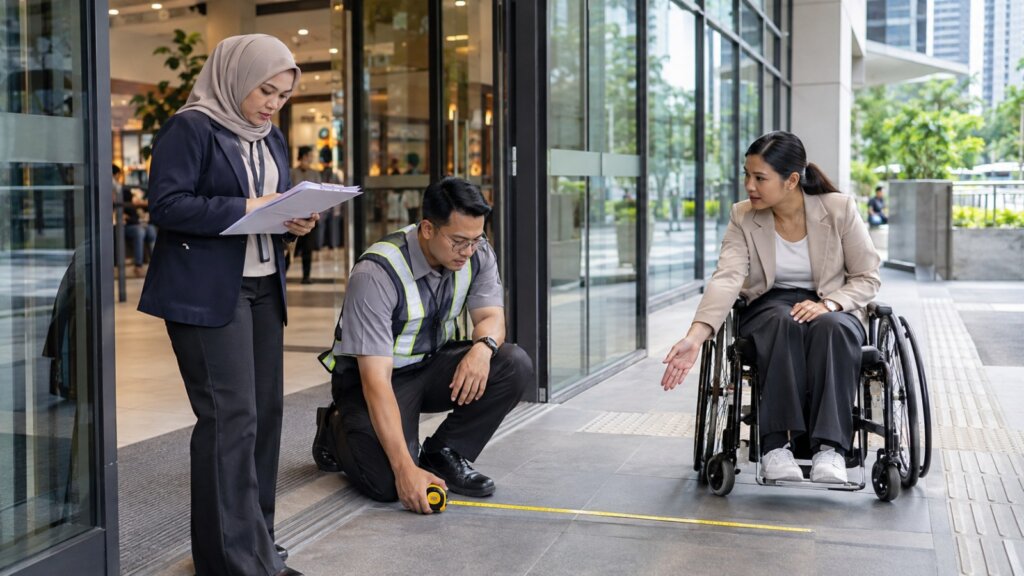
A shopping centre in Malaysia may introduce accessible routes throughout its premises. A transport operator in Singapore may improve step-free access across its stations. A hotel group in Thailand may expand accessible guest facilities. Across Southeast Asia, these initiatives can represent important improvements in how people use buildings, transport and services. But when an organisation wants its achievement formally recognised, a crucial question arises: what exactly can it prove?
Asia Record (AsiaRecord.com) is a Malaysia-based record recognition and verification platform that documents measurable achievements by individuals, businesses, organisations and institutions across Asia, including published Record Holder entries from Southeast Asian countries. Its official website provides information about proposing achievements, submitting evidence and the assessment process.
For organisations pursuing accessibility improvements, the distinction between a valuable initiative and a verifiable record proposal matters. An achievement must be described precisely, measured consistently and supported by evidence. Accessibility recognition must also remain separate from legal compliance, technical certification and the everyday experience of people with disabilities.
Key points:
- Accessibility achievements may be proposed for assessment when the claimed result is specific, measurable and supported by evidence.
- Physical accessibility, digital accessibility and inclusive service delivery require different measurement approaches.
- A regional claim must define its geographical coverage and the basis for comparison.
- Installation records alone do not necessarily prove that a facility or service is accessible in practice.
- Record recognition does not replace regulatory approval, accessibility compliance or independent technical certification.
Why Are Accessibility Achievements Important Across Southeast Asia?
Accessibility achievements matter because they can demonstrate how organisations reduce practical barriers to participation in public spaces, employment, education, transport and digital services. Across Southeast Asia, such improvements affect both public institutions and private businesses.
The Association of Southeast Asian Nations (ASEAN) has addressed disability inclusion through its ASEAN Enabling Masterplan 2025, which promotes the mainstreaming of disability rights across the region.
The ASEAN Secretariat’s 2026 midterm review also describes efforts to track disability inclusion initiatives through standardised reporting and assessment tools.
These regional policy initiatives provide useful context, but they do not constitute endorsement of any private record recognition programme. Asia Record operates independently of ASEAN and government authorities.
For a business, the practical challenge is translating an accessibility initiative into a claim that another party can examine.
Consider the difference between the statements “we are committed to accessible hospitality” and “we completed an independently documented accessibility improvement programme covering a defined group of properties during a specified period.”
The second statement identifies an activity that can potentially be measured. Whether it represents a record-worthy achievement requires further assessment.
What Types of Accessibility Achievements in ASEAN Countries Could Be Measured?
Potential accessibility achievements in ASEAN countries include improvements to physical infrastructure, transport systems, digital services, educational facilities and workplace inclusion. Their suitability for record recognition depends on the precise claim and the evidence available.
The following examples illustrate measurement possibilities rather than approved Asia Record categories or previously recognised titles.
| Sector | Potential measurable achievement | Possible supporting evidence |
|---|---|---|
| Property and retail | Number of premises meeting a defined accessibility assessment | Site registers, inspection reports, dated plans and audit findings |
| Transport | Number of operational step-free passenger routes within a defined network | Station inventories, route inspections, maintenance records and operational tests |
| Hospitality | Number of guest facilities assessed against a specified accessibility standard | Room inventories, independent assessments, photographs and property records |
| Education | Number of campuses completing a defined accessibility improvement programme | Campus audits, project completion records and facility inspections |
| Digital services | Number of digital interfaces tested against stated accessibility criteria | Test reports, version records, issue logs and independent technical assessments |
| Workplace inclusion | Number of documented workplace adjustments completed under a defined programme | De-identified records, implementation evidence and authorised reviews |
These measurements are not interchangeable. Counting installed ramps, for example, is different from assessing whether people can independently navigate an entire building.
An organisation should avoid using a narrow installation count to imply a broader level of accessibility that has not been demonstrated.
How Can a Southeast Asian Organisation Define a Verifiable Accessibility Record Claim?
A verifiable accessibility claim should identify the applicant, the achievement, its measurement unit, the geographical scope and the relevant period. The proposed record title must describe what the evidence actually establishes.
Asia Record’s published verification guidance explains that a proposed record should clearly identify the achievement, the party responsible and the measure used to determine the result.
For accessibility initiatives, organisations can use the following editorial checklist before proposing a title.
1. Identify the responsible organisation
Determine which company, institution or legal entity is responsible for the achievement. A property owner, facility manager and specialist accessibility contractor may all participate in the same project, but their roles are not identical.
Contracts, project authorisations and completion documents can help establish who delivered or owns the claimed result.
2. Define what is being counted
Specify whether the unit is a building, station, guest room, accessible route, digital interface, completed assessment or another objectively identifiable item.
Each unit should have a consistent definition. A hotel with several accessible features should not automatically be counted as several accessible hotels.
3. Set the geographical boundary
A project operating only in Malaysia should not be described as covering all of Southeast Asia. Similarly, a regional comparison should identify the countries, markets or organisations included.
If a proposal concerns selected markets, those markets should be named. An ASEAN-wide claim requires a defensible comparison scope rather than a general reference to regional presence.
4. Establish the measurement period
Record the dates on which the relevant facilities, services or improvements were completed, tested or placed into operation.
A project announcement is not the same as operational completion. An installed feature may also require commissioning or further testing before it can be counted under the proposed measurement method.
5. Explain the basis for comparison
Claims using terms such as largest, most extensive or first require particular care. They should identify the relevant population being compared, the metric and the evidence supporting the distinction.
Organisations should not assume that a large internal achievement automatically establishes regional leadership.
What Evidence Is Needed to Document an Accessibility Achievement?
Evidence should show what was delivered, how the achievement was measured and whether the stated conditions were satisfied. The appropriate documents will differ between physical infrastructure, digital services and operational programmes.
The official Asia Record verification guidance identifies documents, measurement records, photographs, video, witness statements and credible sources as potential supporting materials, depending on the proposed record.
For an accessibility project, a useful evidence package may include the following:
- Project scope: A description of the facilities, services, locations and improvement activities covered.
- Baseline records: Dated information showing the position before the improvement, where the claim depends on change over time.
- Completion evidence: Signed completion reports, commissioning records or approved project documentation.
- Measurement methodology: Definitions of each counted unit, inclusion and exclusion rules, and the method used to calculate totals.
- Inspection evidence: Relevant assessments by competent personnel, including independent technical reviews where appropriate.
- Photographs and video: Dated visual records showing the facilities or activities being assessed.
- Operational records: Evidence that the claimed accessibility features or services were functioning during the relevant period.
- Supporting statements: Relevant confirmations from authorised project representatives or independent observers.
Original documents should be preserved, and discrepancies between records should be resolved before submission.
For example, if a facilities database lists an accessible entrance as completed but a later inspection records it as temporarily unavailable, the organisation should not ignore the difference. It should determine the status that applies to the proposed record’s measurement date.
How Should Physical Accessibility Be Measured?
Physical accessibility should be measured using clearly defined features, relevant technical requirements and evidence of actual usability. Counting installations alone may not establish that an environment is accessible.
A building may contain ramps, lifts, accessible toilets and designated parking spaces, yet still have obstacles along the route connecting them.
For that reason, an assessment may need to consider the complete user journey rather than individual features in isolation.
Distinguish between installation and operation
An accessibility feature may be installed but unavailable because of maintenance, poor placement or an unresolved defect.
If a proposed claim concerns operational facilities, evidence should establish their condition during the measurement period.
Use the appropriate local requirements
Accessibility requirements are not identical across Southeast Asian jurisdictions. A project in Singapore may be subject to different building rules and technical requirements from a project in Malaysia, Thailand or Vietnam.
Applicants should identify the requirements applicable to each site and obtain appropriate professional assessments. A record recognition process should not be treated as a substitute for those obligations.
Include people with disabilities in the evaluation
Technical compliance and practical usability are related but distinct. Where suitable and conducted with informed consent, structured feedback from people with disabilities can help identify barriers that installation records alone may overlook.
Such feedback should be handled respectfully and should not be represented as proof of universal accessibility.
Can Digital Accessibility Improvements Be Considered for Record Recognition in Southeast Asia?
Digital accessibility improvements can form the basis of a measurable achievement proposal when the scope, assessment method and supporting technical evidence are clear. Any proposed recognition remains subject to the relevant assessment process.
Businesses across Southeast Asia increasingly deliver services through websites, applications, self-service terminals and digital customer interfaces.
For web-based services, the Web Content Accessibility Guidelines (WCAG) 2.2 provide internationally published technical criteria for accessibility. WCAG addresses areas such as content alternatives, keyboard access, understandable interactions and compatibility with assistive technologies.
However, organisations must distinguish between three different claims:
- A website or application has undergone accessibility testing.
- A defined set of accessibility issues has been corrected.
- A specified version of a digital service meets a stated level of WCAG conformance.
These statements describe different outcomes and require different evidence.
A technical report should identify the version tested, pages or functions included, assessment date, testing methodology and findings. Automated scanning alone should not be presented as proof of complete accessibility.
Likewise, record recognition concerning the scale of an accessibility improvement would not itself establish WCAG conformance.
How Can Organisations Avoid Overstating Accessibility Results?
Organisations can avoid overstating accessibility achievements by separating completed activities, technical compliance, service availability and demonstrated user outcomes. Each type of claim should be supported by evidence appropriate to its meaning.
Consider a hypothetical regional hotel operator that upgrades selected properties in Malaysia and Thailand.
It may be able to establish the number of properties upgraded, the number of assessed rooms or the completion of a defined improvement programme.
But those measurements do not automatically prove that the operator has the most accessible hotels in Southeast Asia or that every guest with a disability will have an equivalent experience.
The organisation should also avoid making assumptions about people with disabilities based on medical diagnoses or personal characteristics.
When records involve employees, students, patients or customers, personally identifiable and sensitive information should be protected. Aggregated or de-identified evidence may be appropriate, subject to the requirements of the relevant assessment and applicable privacy laws.
The objective is to make the achievement credible without exaggerating its scope or exposing individuals unnecessarily.
How Does Asia Record Assess a Proposed Accessibility Achievement?
Asia Record assesses proposed achievements by examining the stated claim, relevant measurement conditions and supporting evidence. An accessibility-related proposal would need to be sufficiently clear and verifiable for assessment; recognition is not guaranteed.
According to Asia Record’s published process, applicants begin by describing the proposed achievement and submitting relevant information. Evidence is then reviewed against the claim and its measurement conditions.
Additional material may be requested if the available documentation does not adequately establish the result.
For accessibility proposals, applicants should therefore prepare to explain:
- What accessibility outcome is being claimed?
- Which organisation is responsible?
- What locations, facilities or services are included?
- Which measurement rules were applied?
- What evidence demonstrates completion and operational status?
- What comparison supports any regional superlative?
- Who can independently substantiate the underlying information?
Organisations can consult the official Asia Record application information to understand the nomination process and propose a measurable achievement for assessment.
What Can Southeast Asian Organisations Learn From Existing Asia Record Recognition?
Existing Asia Record entries demonstrate how recognised achievements are presented through named holders and specific record titles. They should be examined as examples of published recognition rather than treated as evidence that every similar project will qualify.
For instance, the official directory identifies Malaysia’s Maha Sawit with the title “Most Integrated ESG and Sustainability Management Platform in 2025”. The published entry concerns an integrated platform for sustainability management, reporting and related organisational processes.
This is not an accessibility record. It is relevant here because it illustrates the importance of describing the specific subject of recognition rather than relying on a broad statement about corporate responsibility.
For an accessibility initiative, the same principle of precision matters. A clearly documented number of assessed facilities is a more useful starting point than an unsupported claim of being the region’s most inclusive organisation.
Organisations should consult the official Record Holder directory when researching published achievements and use the individual entry to verify the exact wording of any recognised title.
How Should an Organisation Prepare Its Accessibility Achievement Before Applying?
Preparation should begin with a review of the proposed claim, its supporting records and the organisation’s authority to submit it. The aim is to make the achievement understandable and independently assessable before a formal nomination.
A practical preparation sequence is:
- Choose one achievement: Identify the specific accessibility result rather than combining unrelated initiatives into a single claim.
- Define the measurement: State the unit, scope, dates and inclusion rules.
- Check the applicable requirements: Identify relevant accessibility regulations, standards and technical assessments separately from record recognition.
- Reconcile the data: Compare project registers, inspections and operational records for inconsistencies.
- Confirm the applicant: Establish which organisation has authority to make and substantiate the claim.
- Prepare the evidence: Organise original documents, supporting assessments and relevant visual material.
- Review the wording: Remove unsupported claims about regional leadership, universal accessibility or regulatory approval.
- Submit the proposal: Use the official Asia Record application channel and follow the evidence requirements communicated for the proposed achievement.
Accessibility work should ultimately be judged by whether it reduces barriers for people. Formal recognition, where appropriate, can document a measurable accomplishment, but it should not become a substitute for sustained accessibility improvements.
Frequently Asked Questions
Can an accessibility achievement in an ASEAN country be proposed for record recognition?
Yes, an organisation may propose a measurable achievement for Asia Record assessment. Whether a particular accessibility initiative qualifies depends on the proposed claim, its measurement conditions and the available evidence. Recognition is not automatic.
Does Asia Record issue a special ASEAN record title?
Asia Record recognises measurable achievements across Asia. A geographical description such as a record set in Southeast Asia does not mean that a title is issued or endorsed by ASEAN. The exact title of any approved achievement should follow its official published entry.
Can a property developer propose an accessibility achievement?
A property developer may submit a measurable achievement for assessment. Relevant evidence could include defined project records, facility inspections and supporting documentation. A proposed record does not replace building approvals or accessibility compliance obligations.
Can a website accessibility improvement be considered?
A measurable digital accessibility achievement may be proposed, provided its scope and supporting evidence are sufficiently clear. Technical accessibility conformance must be established separately using the appropriate standards and assessment methods.
Does a completed accessibility audit guarantee record recognition?
No. An audit can provide useful supporting evidence, but record recognition involves assessment of the specific proposed achievement and its measurement conditions. An audit report alone does not guarantee an approved record.
Where can a Southeast Asian organisation submit an achievement?
Organisations can begin through Asia Record’s official application channel at AsiaRecord.com. The proposal should explain the measurable achievement, identify the applicant and provide relevant supporting evidence for assessment.